
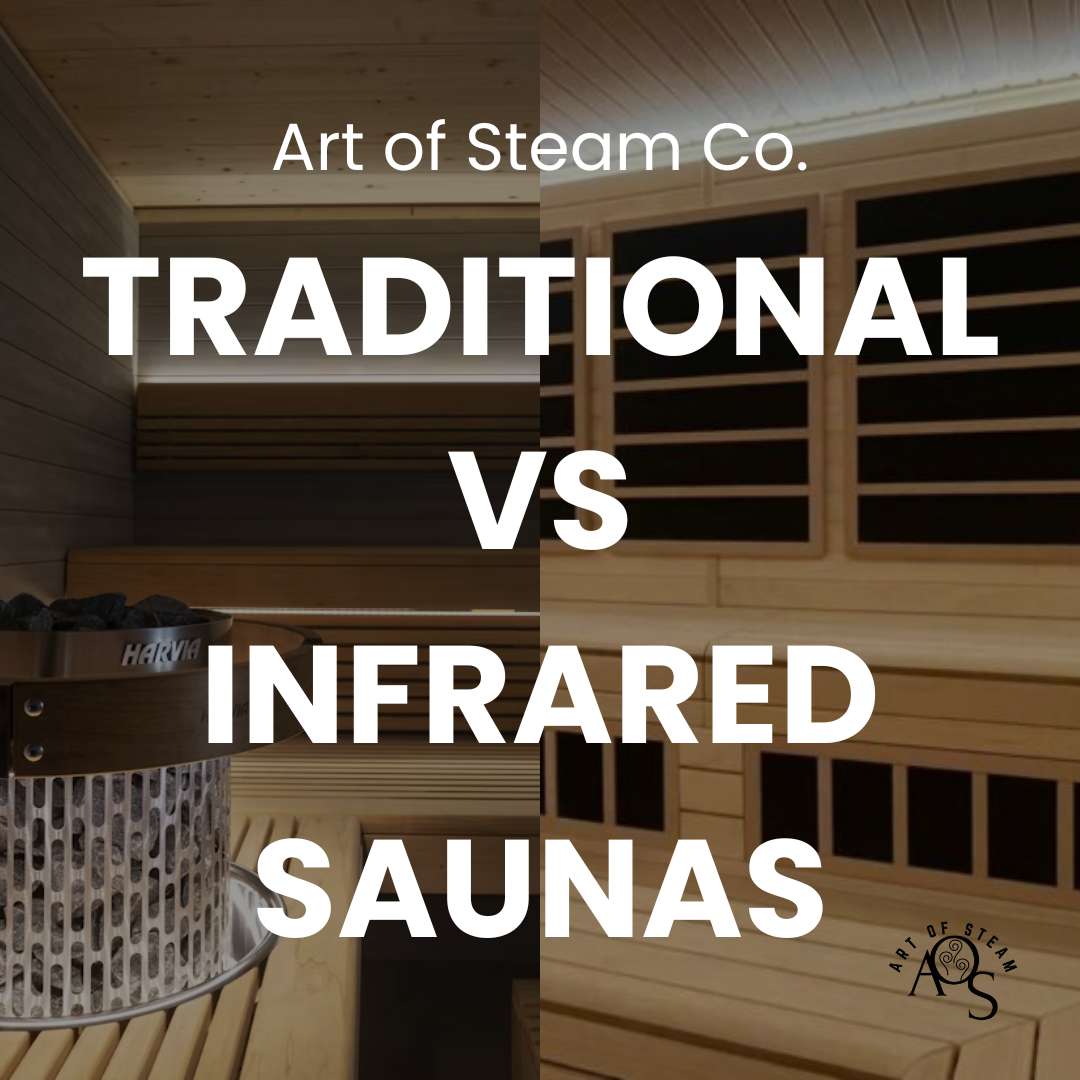
Traditional vs. Infrared Saunas: What You Need to Know
Saunas have become one of the most sought-after home wellness features, offering relaxation, recovery, and a sense of luxury. But when planning a home sauna, the first question is often: traditional or infrared?
While both will make you sweat, the two technologies are very different. Traditional saunas have centuries of history and strong scientific backing, while infrared saunas are a newer form of heat therapy with growing popularity. Let’s explore how they differ, what research says about each, and what you should consider for your home installation.
Traditional Saunas: A Time-Tested Ritual

Traditional Finnish saunas heat the air inside the room to 150°F–195°F using an electric or wood-burning heater. Stones on the heater store and radiate heat, and pouring water over them creates bursts of steam, briefly raising humidity. This combination of dry heat and steam is what defines a true sauna.
The experience is intense and immersive: the aroma of hot wood, the hiss of steam, and the social tradition of sitting together in the heat. Sessions usually last 10–20 minutes, followed by cooling breaks.
Proven Health Benefits
Unlike many wellness fads, traditional saunas have decades of research behind them. Finnish studies following thousands of people for over 20 years show regular sauna use is linked to:
-
Lower risk of cardiovascular disease and high blood pressure
-
Improved circulation and reduced muscle soreness
-
Lower risk of dementia and Alzheimer’s disease
-
Even increased overall longevity
The high heat stresses the body in a way similar to moderate exercise—raising heart rate, dilating blood vessels, and boosting circulation. Many users describe a deep sense of relaxation and better sleep afterward.
Installation & Energy Use
-
Electrical needs: Most home electric heaters, like those from Harvia, run on 240V and require a dedicated breaker (a 4.5 kW unit draws ~19 amps).
-
Heat-up time: 30–40 minutes to reach ideal temperature.
-
Energy cost: Around $0.30–$0.50 per session.
-
Wood-burning option: Requires a chimney but offers unmatched ambiance.
While installation is a larger project—insulated walls, vapor barrier, and possibly a drain—a traditional sauna can last for decades with minimal maintenance.
Infrared Saunas: A Modern Alternative

Infrared saunas use panels that emit infrared light, which penetrates the skin and warms the body directly. The cabin air remains much cooler, usually 120°F–140°F, making it easier to stay inside for longer sessions.
Infrared saunas are often marketed as more accessible for people who dislike high heat, but sauna experts point out that these are technically not “saunas” in the Finnish sense, since they don’t heat the air or create steam. They are better described as infrared therapy rooms.
What the Research Shows
Infrared saunas induce sweating, relaxation, and modest cardiovascular effects, but most benefits mirror those of traditional saunas. Claims of superior detoxification or dramatic calorie burn are not strongly supported.
-
Studies suggest infrared saunas may help with blood pressure, pain relief, and recovery—but these effects are also seen in traditional saunas.
-
Long-term research is limited, and many studies are small or manufacturer-sponsored.
-
No major health risks have been reported, but the science is still emerging.
In other words: infrared saunas are safe and relaxing, but their unique benefits remain unproven compared to the wealth of data behind traditional sauna bathing.
Installation & Energy Use
-
Electrical needs: Most plug into a standard 120V outlet (1.5–2.0 kW).
-
Heat-up time: Minimal—often ready within minutes.
-
Energy cost: Only pennies per session.
-
Maintenance: Simple—no steam or drainage required.
Infrared cabins are typically smaller, fitting 1–2 people, and are designed for easy indoor setup.
EMF Concerns with Infrared Saunas
Because infrared saunas rely on electrical heating panels, they raise questions about EMF (electromagnetic field) exposure.
-
All electrical devices emit EMFs, but infrared panels are close to the body, leading some users to be cautious.
-
Reputable brands design their saunas with low-EMF panels and publish safety certifications.
-
Cheaper models may cut corners, producing higher EMF levels.
While current evidence doesn’t show health risks from sauna-level EMF exposure, sensitive individuals may prefer to invest in low-EMF certified models—or opt for a traditional sauna, which has no comparable EMF output.
Which Sauna Fits Your Home?
Choose a traditional sauna if:
-
You want an authentic, social experience with steam and high heat.
-
You value the extensive research on health and longevity benefits.
-
You’re building a dedicated wellness space indoors or outdoors.
-
You want a long-lasting investment with heaters from trusted brands like Harvia.
Choose an infrared sauna if:
-
You prefer a gentler, dry heat at lower temperatures.
-
You need an easy plug-and-play installation with minimal electrical work.
-
You’re budget-conscious or have limited space.
-
You plan to use it alone or with one partner.
Final Thoughts
Infrared saunas and traditional saunas both offer relaxation and heat therapy, but they are not the same. Infrared cabins are best thought of as modern heat therapy devices, convenient and efficient but still under study. Traditional saunas remain the authentic, proven option, deeply rooted in culture and science, delivering an unmatched wellness experience.
At Art of Steam Co., we recommend exploring both options, but for those seeking the full Finnish ritual and time-tested benefits, a traditional sauna heater remains hard to beat. As an authorized Harvia and Helo dealer, we can help you find the right products for your sauna build. Feel free to contact us with any questions!
