
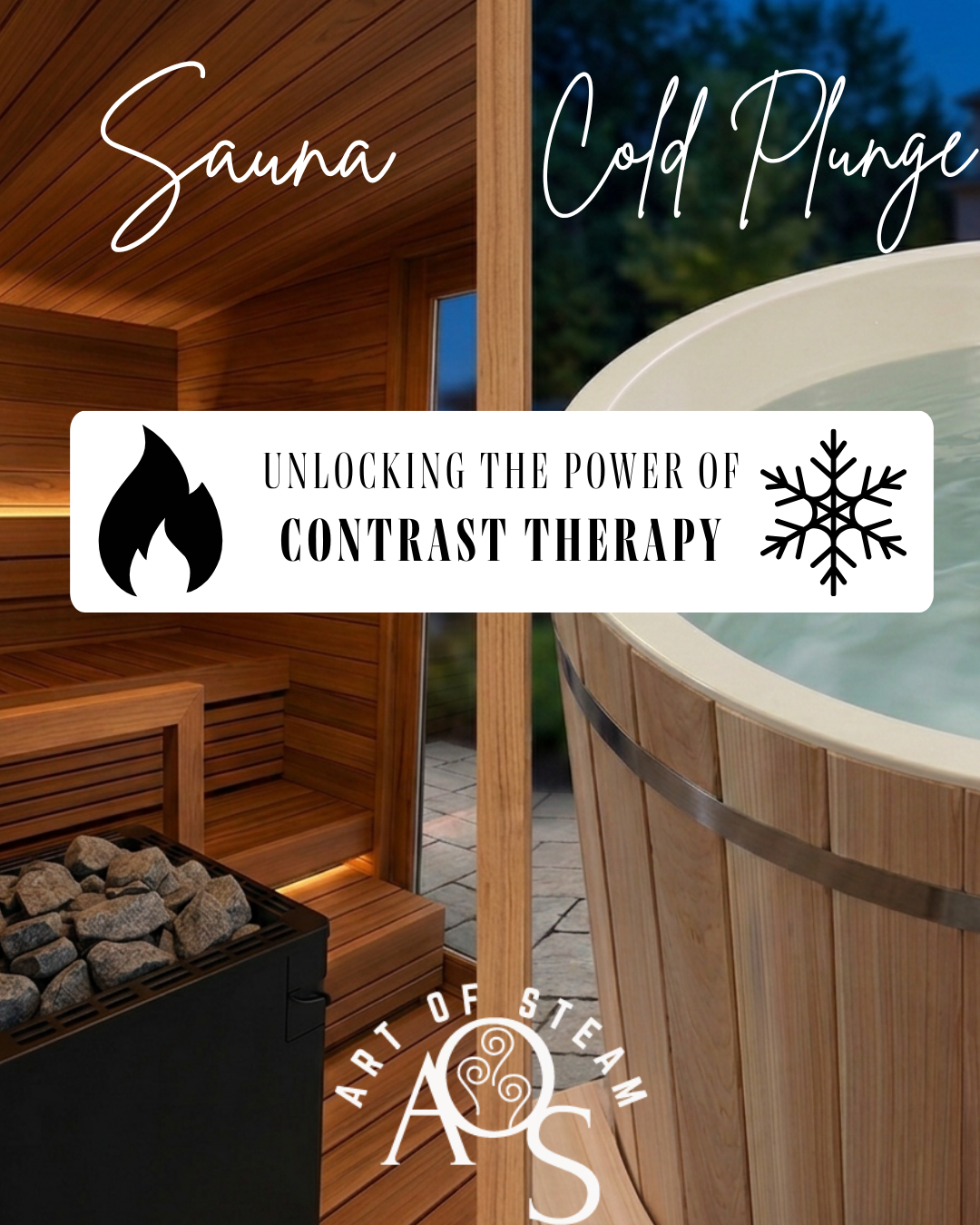
Saunas and cold plunges are two of today's biggest wellness recovery trends — and each delivers unique health benefits on its own. But combine them in a single routine and you unlock contrast therapy, a practice that takes those benefits to a whole new level.
Whether you're chasing faster recovery, more sustained energy, or a full nervous-system reset, here's everything you need to know about sauna and cold plunge contrast therapy — including the exact routine to follow.

In this guide
Quick Answer
Contrast therapy alternates sauna heat (150°F–195°F traditional, or 120°F–140°F infrared) with a cold plunge (45°F–58°F) for 1–3 minutes at a time, repeated over 2–3 rounds. It's known as the Nordic Cycle and is linked to faster muscle recovery, better circulation, lower stress, and stronger immune function.
What Is Contrast Therapy?
Contrast therapy is a recovery method that alternates between extreme heat exposure and cold water immersion in rapid succession. It works by taking advantage of your body's natural circulatory response to temperature extremes: heat causes your blood vessels to dilate (vasodilation), expanding blood flow, while cold causes them to constrict (vasoconstriction), forcing blood inward to protect your vital organs.
Alternating between the two creates a powerful "vascular pumping" effect that accelerates circulation, flushes out metabolic waste, and triggers a deep physiological reset across your entire nervous system.
The Benefits: How Contrast Therapy Transforms Your Body & Mind
When you combine a high-heat sauna session with a cold plunge, you get the best of both worlds. Here's how a sauna and cold plunge routine can upgrade your daily health, recovery, and focus:
1. Sustained Energy Levels
Cold exposure triggers a dramatic surge in the neurotransmitters responsible for focus, alertness, and drive. Unlike the spike and crash of caffeine, contrast therapy provides a clean, sustained boost in mental and physical energy that lasts for hours.
2. Rapid Muscle Repair & Recovery
Intense workouts create micro-tears in muscle fibers and cause lactic acid buildup. Cold exposure constricts blood vessels to flush out metabolic waste, while the sauna's heat delivers fresh nutrients and oxygen to repair damaged tissue — cutting recovery time nearly in half.
3. Supercharged Circulation
Contrast therapy acts like a mild workout for your blood vessels. Alternating between hot and cold forces your vascular system to dilate and constrict repeatedly, improving cardiovascular function, regulating blood pressure, and delivering nutrients to every cell in your body.
4. Stress Reduction & Nervous System Reset
Stepping into cold water induces a mild, temporary stress response. Practicing calm, deep breathing during the plunge trains your brain to regulate your central nervous system under pressure. Following this with the deep heat of a sauna shifts your body into the parasympathetic state, significantly lowering cortisol.
5. Strengthened Immune Function
Regular heat and cold exposure stimulates white blood cell production. Sauna sessions increase heat shock proteins that protect cellular health, while cold exposure boosts the immune cells responsible for fighting off infection and illness.
6. Healthier, Glowing Skin
The sauna opens pores to sweat out impurities, dirt, and excess oil. Following up immediately with a cold plunge tightens pores, reduces facial inflammation, and boosts blood flow to the skin's surface for a clean, healthy glow.
7. Metabolic Support & Weight Management
Cold plunging activates brown fat, a special type of fat that burns calories to generate body heat. Combined with the elevated heart rate you get in the sauna, contrast therapy boosts your resting metabolic rate and supports weight management with consistent use.
What Is a Cold Plunge?
At its simplest, a cold plunge involves immersing your body in cold water — typically between 45°F and 58°F — for a short period, usually 1 to 5 minutes.
While ice baths have been used for centuries by traditional cultures and athletes, modern cold plunge tubs make controlled cold exposure almost effortless. The sudden temperature drop triggers a surge of physiological responses designed to protect, restore, and invigorate the body.

What Is a Sauna?
A sauna is an enclosed room or small space heated to high temperatures — typically ranging from 120°F to nearly 200°F — designed to elevate your core body temperature and induce heavy sweating. Originating thousands of years ago in Scandinavian and Eastern European cultures, heat therapy relaxes tight muscles, flushes toxins through sweat, and stimulates the cardiovascular system, mimicking the effects of moderate exercise.

Understanding Your Equipment Options
Before diving into a routine, it helps to know the tools of the trade. Both saunas and cold plunges come in distinct styles, each offering unique advantages depending on your space, budget, and goals.
Types of Saunas: Traditional vs. Infrared

While all saunas use heat to induce sweating, the way they generate that heat creates two very different experiences:
- Traditional Saunas (Finnish Style) — Heated using hot stones (via electricity or wood stoves), raising the room's air temperature to 150°F–195°F. Water can be poured over the stones to create steam and raise humidity. Best for those who love deep sweating, high heat, and heavy steam. Shop traditional saunas →
- Infrared Saunas (The Modern Tech) — Infrared light panels emit radiant heat absorbed directly by your body rather than warming the air around you, at cooler operating temperatures of 120°F–140°F. Best for people sensitive to extreme heat, or those focusing on deep cellular sweat and joint pain relief. Shop infrared saunas →
Types of Cold Plunge Tubs
Choosing the right cold plunge depends on how hands-on you want to be with temperature management and maintenance:
- All-in-One Chiller Tubs (Plug-and-Play) — Equipped with built-in sanitation (ozone or UV) and water chillers that keep temperatures precise without needing ice. Ideal for home or commercial setups requiring zero hassle.
- Inflatable / Portable Plunges — Made of drop-stitch material or heavy-duty PVC. Highly durable, cost-effective, and easy to move or pack up for travel.
- Ice Baths (DIY Tubs & Chest Freezers) — Traditional tubs or converted chest freezers that require adding ice manually. Budget-friendly, but require more ongoing effort to regulate temperature.
The Ideal Contrast Therapy Routine — The Nordic Cycle
The hot-and-cold contrast sequence is traditionally known as the Nordic Cycle. It originates from Northern Europe, most famously Finland, where locals would alternate between sweating in intensely heated wooden saunas, then taking a swift dip into a frigid lake, a snowbank, or a hole cut in the ice. Today, this ancient ritual has been modernized for the average person, but it remains popular for the results it produces in the body.

Here's how to perform the cycle with your sauna and cold plunge:
Prep & Hydrate
Rinse in the shower and drink a large glass of water or electrolytes before starting to prepare for sweat loss.
Sauna
Allow your core temperature to rise, relax tight muscles, and initiate deep sweating.
Cold Plunge
Submerge calmly up to your chest or shoulders. Focus on slow, steady exhales to calm your heart rate.
Rest & Re-Warm
Sit comfortably at room temperature. Let your body begin re-warming naturally before returning to the heat.
Repeat Cycle
Repeat the Sauna → Plunge → Rest loop. Always listen to your body and stop if you feel lightheaded or dizzy.
Rinse & Hydrate
End with a lukewarm shower to rinse off sweat, dry off, and finish with water or electrolytes.
Frequently Asked Questions
Should you start with hot or cold in contrast therapy?
Most contrast therapy routines start with heat (sauna) to relax muscles and raise core temperature, then follow with cold immersion. Ending on cold is common for an energizing effect, though some people prefer to finish on a warm re-warm phase — either way works as long as you complete full cycles.
How long should a contrast therapy session last?
A typical session runs 45–60 minutes total, including 2–3 rounds of 15–20 minutes in the sauna, 1–3 minutes in the cold plunge, and 5–10 minutes of rest between rounds.
Is it safe to do contrast therapy every day?
Many people safely practice contrast therapy several times a week to daily. If you have a cardiovascular condition, are pregnant, or have a health concern, check with a doctor before starting, and always stop if you feel lightheaded or dizzy.
Do I need both a sauna and a cold plunge to get the benefits?
Saunas and cold plunges each offer real standalone benefits, but the "vascular pumping" effect that drives faster recovery, circulation, and stress reduction comes specifically from alternating between the two.
Ready to Try Contrast Therapy?
Contrast therapy is one of the most effective, natural ways to reset your body, clear your mind, and optimize your physical health. Whether you're an athlete pushing for peak recovery or simply looking for relief from daily stress, adding a sauna and cold plunge routine to your life is a total game-changer.
