
Traditional vs. Infrared Saunas: Which Heat Therapy Is Best for You?
Choosing between a traditional sauna and an infrared sauna comes down to the kind of heat experience you want. Both can deliver a deep sweat and a relaxing at-home wellness routine, but they heat your body in very different ways.
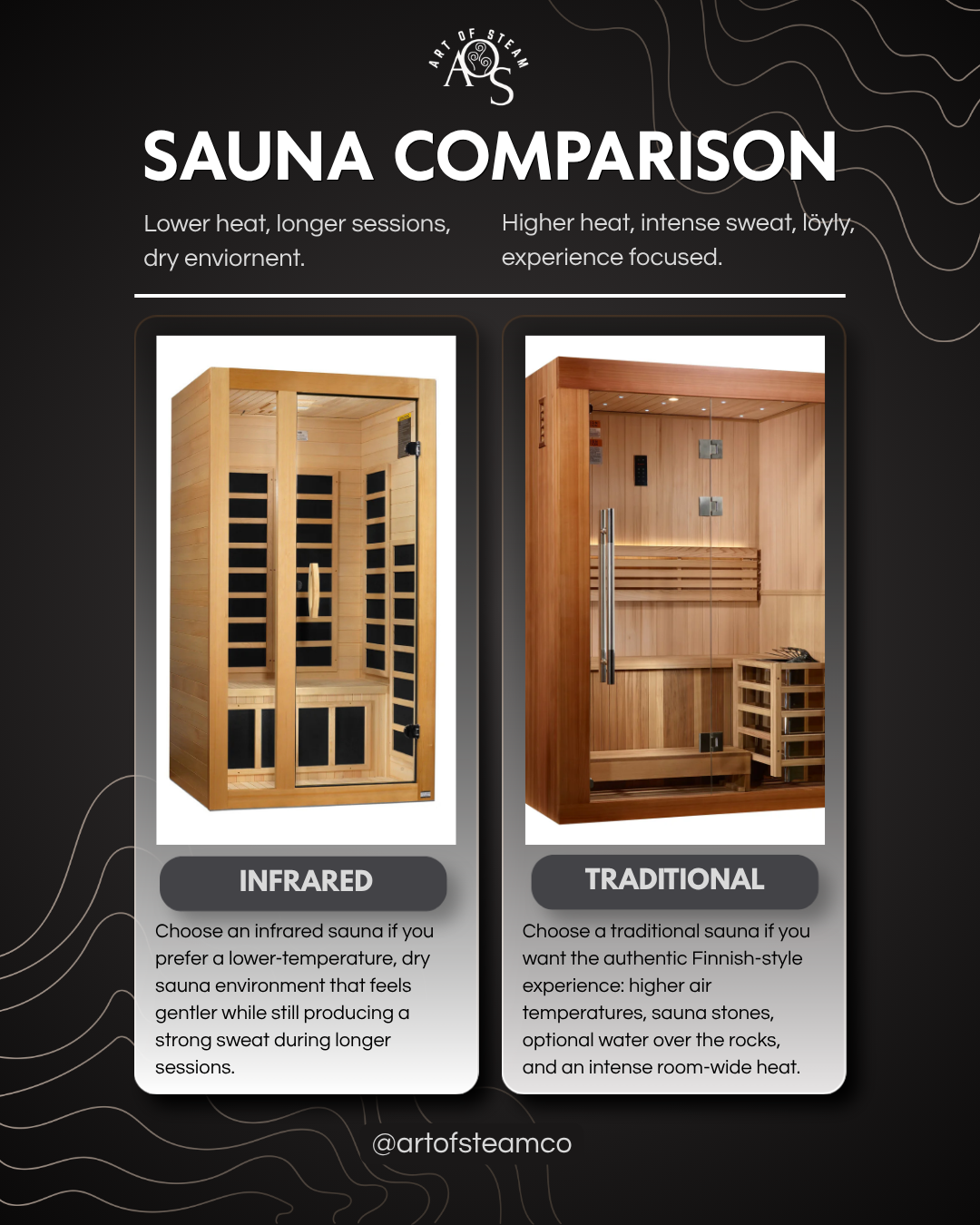
Choose a traditional sauna if...
You want the authentic Finnish-style experience: higher air temperatures, sauna stones, optional water over the rocks, and an intense room-wide heat.
Choose an infrared sauna if...
You prefer a lower-temperature, dry sauna environment that feels gentler while still producing a strong sweat during longer sessions.
If you are adding a sauna to your home, one of the biggest decisions is whether to build around a traditional sauna, an infrared sauna, or a hybrid sauna that offers elements of both. This guide breaks down the key differences so you can decide which option fits your space, comfort level, and wellness routine.
Traditional Saunas: The Finnish Classic
High heat, sauna stones, optional steam, and outside-in warming.

Traditional saunas are the classic Finnish sauna experience. They heat the air around you using a wood-burning stove or an electric sauna heater, usually with a basket of stones that store and radiate heat. When water is poured over the hot stones, it creates löyly, a short burst of steam that temporarily increases humidity and makes the heat feel more intense.
This is the experience most people picture when they think of a true sauna: hot air, wood benches, sauna stones, and a ritual that feels both timeless and immersive. If you are designing a new sauna room, you can browse sauna heaters, Harvia sauna heaters, EOS sauna heaters, and wood-burning sauna stoves to build the heat profile you want.
How Traditional Saunas Work

A traditional sauna heats the room first, and your body warms from the outside in. Most traditional saunas operate around 150°F to 194°F, depending on heater size, room design, ventilation, and personal preference. Because the air temperature is high, your body works to cool itself down, which is what creates that heavy, classic sauna sweat.
Good to know: If you are building a custom sauna, heater sizing matters. A room with glass, stone, poor insulation, or a vaulted ceiling may need more power than a simple cubic-foot calculation suggests. Use the sauna heater sizing calculator as a starting point, then always verify with manufacturer specs and local electrical requirements.
Traditional Sauna Benefits
- Authentic sauna experience: Traditional saunas deliver the heat, stones, and water ritual many homeowners want in a classic sauna.
- Intense heat and heavy sweat: The higher room temperature can produce a powerful sweat in a shorter session.
- Cardiovascular-style heat response: The heat naturally raises heart rate as your body works to cool itself.
- Recovery and relaxation: Many sauna users prefer traditional heat for loosening tight muscles, unwinding after workouts, and creating a calming routine.
- Contrast therapy potential: Traditional sauna sessions pair naturally with cold showers, cold plunges, or rest breaks between rounds.
A common traditional sauna routine is 10 to 15 minutes in the sauna, followed by a cool rinse or cold plunge, a few minutes of rest, and then another round. Many people repeat this cycle two to three times depending on comfort and experience level.
Infrared Saunas: The Modern Lower-Temperature Option
Gentler air, direct radiant heat, and inside-out warming.

Infrared saunas use infrared panels instead of a traditional heater and stone basket. Rather than relying on extremely hot air, infrared panels emit invisible thermal wavelengths that warm your body more directly. This creates a very different sauna environment: dry, lower-temperature, and typically easier for beginners to tolerate.
Most infrared saunas operate around 120°F to 150°F. The lower room temperature does not mean the session is ineffective; it simply means the sauna feels different. Infrared sauna users often stay in longer, usually around 30 to 45 minutes depending on the unit, comfort level, and manufacturer guidance.
Full-Spectrum Infrared: Near, Mid, and Far

Many modern infrared saunas advertise full-spectrum infrared, which may include near, mid, and far infrared wavelengths. Each wavelength is commonly described by how deeply it is intended to interact with the body.
Near Infrared
Often associated with the outer layers of the skin and commonly discussed for skin-focused wellness routines.
Mid Infrared
Often positioned for muscle comfort, joint comfort, and post-workout recovery routines.
Far Infrared
Commonly used in infrared saunas to create the deeper warming sensation and sweat response.
Infrared Sauna Benefits
- Lower-temperature comfort: Infrared saunas are often easier for people who find traditional sauna heat too intense.
- Dry operation: Since infrared saunas do not use water over stones, they can be lower-maintenance from a moisture standpoint.
- Longer relaxation sessions: The milder environment can make it easier to relax for 30 to 45 minutes.
- Muscle and joint comfort: Many users choose infrared for post-workout recovery, stiffness, and general body comfort.
- Compact home options: Infrared saunas are popular for indoor home wellness spaces where convenience and everyday use are priorities.
Good to know: Infrared saunas are typically dry and do not create löyly. If you want the ritual of pouring water over sauna stones, a traditional sauna will be the better fit. If you want a lower-temperature dry session, infrared may be more comfortable.
Traditional vs. Infrared Sauna Comparison
Here is the simplest way to compare the two sauna types when planning a home sauna.
| Feature | Infrared Sauna | Traditional Sauna |
|---|---|---|
| How it heats | Uses infrared panels to heat the body more directly. | Uses a heater or stove to heat the air and sauna stones. |
| Typical temperature | About 120°F to 150°F. | About 150°F to 194°F. |
| Environment | Dry, gentle, and lower temperature. | Hot, intense, and optionally humid when water is added to the stones. |
| Session length | Often 30 to 45 minutes. | Often 10 to 20 minutes per round. |
| Best for | Lower-temperature comfort, dry heat, compact indoor wellness spaces, and longer relaxation sessions. | Authentic Finnish-style sauna heat, löyly, contrast therapy routines, and a more intense sauna experience. |
| Maintenance feel | No water over rocks, so there is less moisture to manage. | Requires proper ventilation, heater clearances, and sauna-safe materials. |
| Best Art of Steam starting point | Shop infrared saunas | Shop traditional saunas or shop sauna heaters |

Infrared Sauna vs. Red Light Therapy

Infrared saunas and red light therapy are often confused because both involve light wavelengths, but they are not the same thing.
- Infrared is about heat: Infrared saunas use invisible thermal wavelengths to warm the body and produce a sweat response.
- Red light therapy is about light exposure: Red light therapy uses visible red and near-infrared light for targeted wellness routines, but it is not designed to heat the room like a sauna or create a traditional sweat session.
Some modern infrared saunas include red light panels as an added feature. In that case, the infrared portion is still the sauna experience, while the red light panel is an additional light-therapy feature.
The Verdict: Which Sauna Should You Choose?
There is no single best sauna for every home. The right choice depends on your preferred heat feel, available space, installation requirements, and how you plan to use the sauna.
Choose a traditional sauna if you want:
- The authentic Finnish sauna experience
- Higher heat and a more intense sweat
- Sauna stones and the option to create löyly
- A heater-focused build with brands like Harvia or EOS
- A sauna that pairs well with cold plunge or contrast therapy
Choose an infrared sauna if you want:
- A lower-temperature sauna session
- A dry environment with no water over stones
- Longer, gentler relaxation sessions
- A convenient indoor wellness upgrade
- A simpler plug-and-use style experience, depending on the model
If you like both options, a hybrid sauna may be worth considering. Hybrid models are designed for homeowners who want the flexibility of infrared comfort with a more traditional sauna-style experience in one system.
Ready to Plan Your Home Sauna?
Art of Steam Co. carries premium sauna rooms, heaters, infrared saunas, hybrid saunas, and custom sauna options for home wellness projects. Start with the collection that matches your heat preference, or use our sizing tools to narrow down the right heater for your room.
Traditional vs. Infrared Sauna FAQ
Is a traditional sauna better than an infrared sauna?
A traditional sauna is better if you want the authentic high-heat sauna experience with stones, löyly, and a more intense room temperature. Infrared is better if you prefer a lower-temperature, dry session that feels gentler and can be used for longer sessions.
Do infrared saunas get as hot as traditional saunas?
No. Infrared saunas usually operate around 120°F to 150°F, while traditional saunas commonly operate around 150°F to 194°F. The lower air temperature is part of what makes infrared saunas feel more approachable for many users.
Can you pour water on rocks in an infrared sauna?
No. Infrared saunas do not use a traditional stone basket for löyly. If pouring water over hot stones is important to you, choose a traditional sauna with an appropriate electric heater or wood-burning sauna stove.
Which sauna is easier to maintain?
Infrared saunas are often simpler from a moisture standpoint because they use dry heat and do not require water over stones. Traditional saunas are still very manageable, but they require proper ventilation, sauna-safe materials, and correct heater installation. It is also important to mention that IR saunas are typically easier to install with less electrical requirements.
What is the best sauna for a home?
For an authentic sauna ritual, choose a traditional sauna. For lower-temperature convenience, choose infrared. For flexibility, consider a hybrid sauna. If you are building a custom room, start with room size, insulation, glass area, and heater requirements before choosing the final system. Note that these two therapies have very different electrical requirements that you should go over with your electrician.
Safety note: Sauna use is not appropriate for everyone. If you are pregnant, have heart or blood pressure concerns, take medications that affect heat tolerance, or have any medical condition, consult a qualified healthcare professional before using a sauna. Always follow the sauna manufacturer’s instructions for session length, temperature, ventilation, clearances, and installation.
