
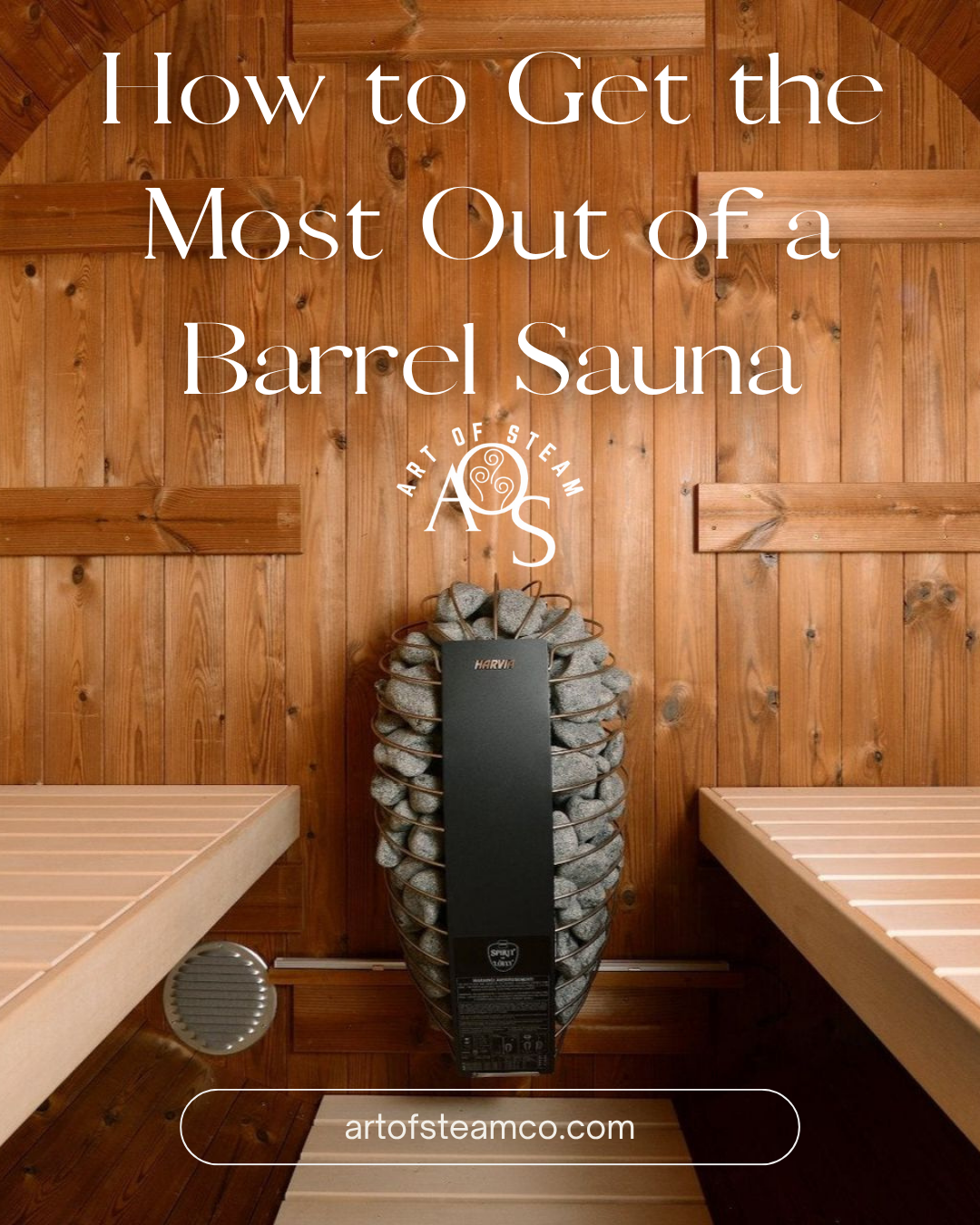
How to Get the Most Out of a Barrel Sauna
Barrel saunas are one of the most popular outdoor sauna styles on the market. They are compact, visually striking, and often easier to install than a full cabin sauna. Still, many experienced sauna enthusiasts will tell you the same thing: a barrel sauna is not the ideal sauna shape.
They are not wrong. Barrel saunas have real limitations, especially when it comes to bench height, airflow, and heat distribution. But for many homeowners, a barrel sauna is the most practical option. If that is the route you are taking, the goal is not to pretend a barrel is perfect. The goal is to make it perform as well as possible.
The good news is that with the right heater, better ventilation, smarter bench use, and a few key adjustments, you can dramatically improve the comfort and performance of a barrel sauna.

Why People Choose Barrel Saunas
Barrel saunas are popular for good reason. They look great in backyards, fit well into smaller spaces, and are often more affordable than larger custom sauna builds. Many kits are also relatively straightforward to assemble, making them appealing to homeowners who want a sauna without a major construction project.
Their rounded shape can also help the room heat up quickly. Because there is less unused upper-corner space than in many box-style rooms, barrel saunas often feel efficient and fast to warm.
That said, heating up quickly is not the same thing as delivering the best possible sauna experience. This is where barrel sauna design starts to draw criticism.
The Main Problem With Barrel Saunas
The biggest weakness of a barrel sauna is not appearance. It is performance at bench level.
Traditional sauna design follows a simple principle often referred to as the Law of the Bench: your feet should be at or above the level of the heater stones. That is one of the keys to a more balanced, comfortable heat experience.
In many barrel saunas, the curved walls limit how high the benches can go. That often leaves bathers sitting too low in the room, where feet stay cooler while hotter air collects above. The result is a classic barrel sauna issue: hot head, cold feet.
The takeaway: Barrel saunas are not usually criticized because they cannot get hot. They are criticized because they often do not distribute heat as evenly or comfortably as a better-designed cabin sauna.
How to Improve Barrel Sauna Performance
If you already know a barrel sauna is a compromise, this is where things get practical. These are the biggest ways to get better results.
1. Improve Ventilation First
If you want to get the most out of a barrel sauna, start with ventilation. Good airflow is one of the best ways to reduce stale air, improve comfort, and help move heat more effectively through the room.
We go into more depth in our Sauna Ventilation Guide, but the short version is this: proper vent placement helps create a convection loop that improves the sauna experience from head to toe.
Ventilation for Wood-Burning Barrel Saunas
- Low intake vent: Place a fresh air vent low on the wall behind or near the stove to feed the fire oxygen.
-
Low exhaust vent: Usually placed on the opposite wall under the benches. In some instances, there will be two exhaust vents under each bench.
- High drying vent: Add a vent high on the wall opposite the heater for drying after the session. Keep it closed during use unless the setup specifically calls for otherwise.
A properly functioning chimney also helps create draft, which supports airflow through the room.
Ventilation for Electric Barrel Saunas
- Low intake vent: Typically below or near the heater.
- Low exhaust vent: Usually placed on the opposite wall under the benches. In some instances, there will be two exhaust vents under each bench.
- High drying vent: Useful for drying out the sauna after the session.
A small heat-rated fan near at the exhaust vent(s) can help mix air layers and improve comfort. This is not always necessary, but having a fan would optimize the barrel for better performance.


2. Choose the Right Heater for the Space
The heater is the heart of the sauna, and in a barrel sauna, the right choice matters even more. You usually want a heater that delivers strong performance without wasting space.
Best Electric Heater Options for Barrel Saunas
- Harvia KIP: The Harvia KIP is a dependable wall-mounted heater that fits well in many standard barrel sauna layouts. It is a strong choice for buyers who want traditional heat and a proven design.
- Harvia The Wall: Harvia The Wall offers a cleaner, more modern look while still saving valuable floor space in a compact room.
- Harvia Spirit: The Harvia Spirit stands out visually and provides a softer feel with its stone-forward design.

Best Wood-Burning Heater Options for Barrel Saunas
For off-grid installations or buyers who want a more traditional experience, wood-burning sauna stoves can be an excellent fit.
- Harvia Pro Series: Models like the Harvia M3 and Harvia Pro 20 are rugged, proven choices for outdoor sauna use.

In general, choose an electric heater if convenience, easy startup, and daily use matter most. Choose wood-burning if you value the ritual, atmosphere, and independence of an off-grid setup.
3. Sit Higher Whenever Possible
Bench height matters more in a barrel sauna than many people realize. If your barrel sauna kit gives you any flexibility, mount the benches as high as safely and practically possible.
Even small gains in seating height can improve comfort because they move more of your body into the hotter air layer. If the bench height is fixed, simply sitting farther back and keeping your feet up can make a noticeable difference.
4. Follow the Feet-Up Rule
One of the easiest ways to make a barrel sauna session feel better is to stop leaving your feet down low. If possible, prop your feet up on the bench. This helps compensate for the lower seating geometry and keeps more of your body in the effective heat zone.
5. Let the Sauna Heat Soak
Do not step in the moment the thermometer reaches your target temperature. Give the sauna extra time to heat soak.
In many cases, an additional 15 to 20 minutes allows the wood interior and benches to absorb heat. That creates a more comfortable environment and a better overall feeling than hot air alone.
6. Use Water on the Stones Properly
Good löyly can make a barrel sauna feel dramatically better. When ventilation is working properly and the heater is designed for it, adding water to the stones helps increase humidity and improve the perceived softness of the heat.
This is one area where heater design, stone capacity, and airflow all come together. A barrel sauna may never behave exactly like a well-designed cabin sauna, but the right steam and airflow balance can still create a very enjoyable session.

Can a Barrel Sauna Be a Good Sauna?
Yes, absolutely. A barrel sauna may not be the ideal format from a traditional performance standpoint, but that does not mean it cannot be enjoyable. It simply means you need to be realistic about the design and thoughtful about how you set it up.
If a barrel sauna is what fits your space, budget, or aesthetic goals, there is no reason to dismiss it. The better approach is to understand the weak points and improve them wherever possible.
The Bottom Line on Getting the Most Out of a Barrel Sauna
If you want to get the most out of a barrel sauna, focus on the things that matter most: ventilation, heater selection, bench height, heat soaking, and proper steam use. Barrel saunas are not perfect, but they can still deliver a strong outdoor sauna experience when designed and used intelligently.
The best barrel sauna owners are usually the ones who understand the tradeoffs and optimize around them.
Need Help Choosing the Right Setup?
At Art of Steam Co., we help customers choose sauna heaters and components that fit the actual room, layout, and use case — not just the cubic footage on paper.
Use Our Sauna Sizing CalculatorShop Our Barrel Sauna Collection
Looking for a complete barrel sauna? Explore our selection of outdoor barrel saunas and find the right fit for your space, style, and budget.
Shop Barrel SaunasFrequently Asked Questions About Barrel Saunas
Are barrel saunas less effective than traditional cabin saunas?
Barrel saunas can still provide an excellent sauna experience, but they are generally not as ideal as a well-designed cabin sauna when it comes to bench height and even heat distribution. That said, proper ventilation, a good heater, and smart bench use can significantly improve barrel sauna performance.
How can I make a barrel sauna perform better?
The biggest improvements usually come from better ventilation, choosing the right heater, allowing enough heat soak time, sitting higher in the room, and using water on the stones properly. These changes can help reduce cold feet and improve the overall feel of the sauna.
What is the best heater for a barrel sauna?
The best heater depends on your sauna size, power availability, and how you want to use the sauna. Wall-mounted electric heaters are often a great fit for barrel saunas because they save space, while wood-burning stoves are a strong option for off-grid or more traditional setups.
Do barrel saunas need ventilation?
Yes. Ventilation is one of the most important parts of barrel sauna performance. Proper airflow helps bring in fresh air, remove stale air, and improve heat circulation so the sauna feels more balanced from head to toe.
Why do my feet feel cold in a barrel sauna?
This usually happens because hot air rises while the benches in many barrel saunas sit relatively low. That leaves your upper body in hotter air while your feet stay in a cooler zone. Better ventilation and keeping your feet up can help improve this.
Are barrel saunas good for outdoor use?
Yes. Barrel saunas are especially popular for outdoor use because they are compact, visually appealing, and often easier to install than larger custom sauna structures. They can be a very good option when space or budget makes a full cabin sauna less practical.
